

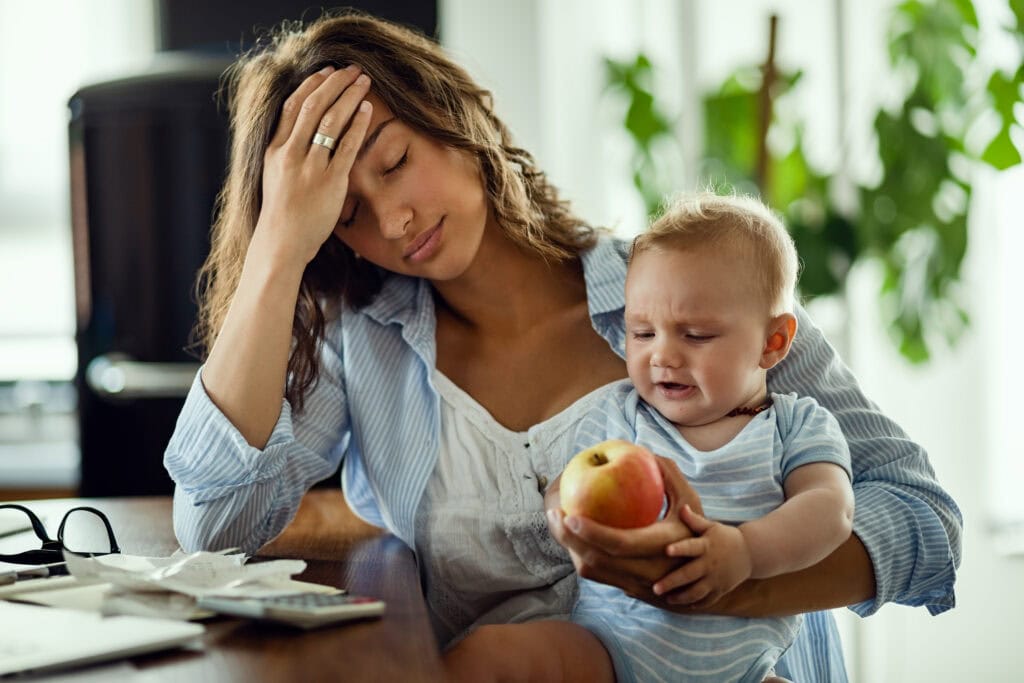
Becoming a mother can bring love, change, exhaustion, uncertainty, and many emotions at once. Yet cultural messages about motherhood often leave little room for women to talk honestly about struggling. The truth about postpartum depression is that it’s a real and treatable mental health condition, not a personal failure or a sign that someone does not love her baby.
Postpartum depression can affect women from many different backgrounds and may look different from one person to another. In this article, we will explore:
- Common myths about postpartum depression
- The difference between postpartum depression and the “baby blues”
- Signs that may indicate a woman needs additional support
- How postpartum depression can affect bonding and daily life
- Treatment options and when to seek help
Understanding the facts can reduce shame and make it easier to reach for support.
The Truth About Postpartum Depression: Common Myths and Facts
Postpartum depression is surrounded by misconceptions that can make women question their own experiences or hesitate to ask for help. The truth is that postpartum depression is a health condition that deserves the same compassion and care as any other mental health concern.
The National Institute of Mental Health describes perinatal depression as a mood disorder that can occur during pregnancy or after childbirth, with symptoms ranging from mild to severe.1
Myth: Postpartum depression is just the “baby blues”
Truth: The baby blues and postpartum depression are not the same experience.
Many women experience mood changes, tearfulness, irritability, or feeling overwhelmed during the first days after childbirth. These feelings, often called the baby blues, typically improve within a few days to 1–2 weeks.1
Postpartum depression involves more intense or persistent symptoms that can interfere with daily life. A woman may feel deeply sad, anxious, hopeless, disconnected, or unable to function in ways that feel typical for her.
When emotional distress continues, becomes more intense, or makes it difficult to care for yourself or manage daily responsibilities, it deserves attention.
Myth: Postpartum depression means you’re a bad mother
Truth: Having postpartum depression says nothing about how much a woman loves her child or how capable she is as a mother.
Depression can affect thoughts, emotions, energy, concentration, sleep, and the ability to feel pleasure or connection.2 A woman may love her baby deeply while also feeling numb, frightened, overwhelmed, or unlike herself.
Shame can make these experiences even harder. Some women believe they’re supposed to feel grateful or happy every moment after giving birth. When reality doesn’t match that expectation, they may blame themselves.
Myth: Only first-time mothers experience postpartum depression
Truth: The truth about postpartum depression is that it can occur after any pregnancy or birth.
A woman who felt emotionally well after one pregnancy may experience depression after another. Every pregnancy, delivery, postpartum recovery, relationship situation, and support system can be different.
A history of depression or other mental health concerns may increase vulnerability, but postpartum depression can also affect women who have never previously experienced depression.3 Changes in hormones, sleep, physical recovery, stress, trauma, social support, and other individual factors can all play a role.
Myth: Postpartum depression always starts immediately after birth
Truth: Symptoms don’t always appear in the first few days after delivery.
Postpartum depression may begin during pregnancy or emerge in the weeks and months following childbirth.4 Because symptoms can develop gradually, some women don’t immediately recognize what they’re experiencing as depression.
This is one reason ongoing conversations about mental health matter throughout pregnancy and the postpartum period. A woman may seem to be adjusting well at first and still need support later.
Myth: Women with postpartum depression always feel sad
Truth: The truth about postpartum depression is that it can involve many emotions and symptoms beyond sadness.
Possible symptoms may include:
- Persistent sadness, emptiness, or hopelessness
- Anxiety, fear, or a sense that something bad will happen
- Irritability or anger
- Feeling emotionally numb or disconnected
- Loss of interest in previously enjoyable activities
- Guilt, shame, or feelings of worthlessness
- Difficulty concentrating or making decisions
- Changes in sleep beyond what would be expected from caring for a baby
- Changes in appetite
- Difficulty feeling connected to the baby
- Feeling overwhelmed by everyday tasks
Depression doesn’t look the same in every woman. The Centers for Disease Control and Prevention emphasizes that depression during and after pregnancy is treatable and encourages women experiencing symptoms to speak with a healthcare provider.5
Myth: A woman should be able to overcome postpartum depression on her own
Truth: Postpartum depression isn’t something a woman can simply think her way out of.
Support from loved ones can be incredibly valuable, but encouragement alone may not resolve a mental health condition. Treatment may involve psychotherapy, medication, practical support, or a combination of approaches based on the woman’s needs.
Finding Support in a Community of Women with Casa Serena
The most important truth about postpartum depression may be this: you don’t have to carry it alone.
At Casa Serena, we understand that women often arrive with layered experiences involving mental health, trauma, substance use, relationships, and major life transitions. Our women-only, trauma-informed community is built around safety, connection, and the belief that healing can happen when women feel genuinely seen and supported.
For women whose mental health concerns occur alongside trauma or substance use, our residential treatment program for women provides structure, individualized care, and a supportive community. Our team also helps pregnant women connect with local resources for themselves and their babies.
For more than 65 years, Casa Serena has created a place where women support women through difficult chapters of life. You’re not a bad mother, a broken person, or a burden because you need help. With compassionate support and the right care, healing is possible.
Call Casa Serena at (866) 912-3786 or contact us to learn more about our programs and find out whether our community may be the right next step for you.
Frequently Asked Questions
How long can postpartum depression last?
The length of postpartum depression varies from one woman to another. Symptoms may continue without appropriate support, while treatment can help women begin moving toward recovery.
There is no single timeline that determines when someone “should” feel better. Healing can take time, and care should reflect each woman’s symptoms, history, circumstances, and needs.
Can postpartum depression make it difficult to bond with a baby?
Yes. Some women with postpartum depression may feel numb, disconnected, or guilty because bonding does not happen in the way they expected.
Difficulty bonding does not mean a woman does not love her baby. Depression can affect emotional connection and the ability to experience pleasure. With support and treatment, both emotional well-being and connection can improve.
Can trauma affect postpartum mental health?
Yes. Pregnancy, childbirth, medical complications, past trauma, or feeling unsafe or out of control can affect emotional well-being during the postpartum period. Women with complex histories may also find that major life transitions bring previous experiences or emotions closer to the surface.
Trauma-informed care recognizes these experiences without blaming or judging the woman. It focuses on emotional and physical safety, choice, trust, and understanding. Casa Serena offers a women’s trauma treatment program designed to help women explore the experiences that may be affecting their mental health and recovery.
When should someone seek immediate help for postpartum mental health symptoms?
A woman should seek immediate professional or emergency help if she is in danger, believes she may hurt herself or someone else, or experiences severe confusion, hallucinations, delusions, or a significant loss of contact with reality.
Postpartum psychosis is different from postpartum depression and requires urgent medical attention. Severe or rapidly changing symptoms should always be taken seriously.
References:
- National Institute of Mental Health (NIMH). (2023). Perinatal depression. https://www.nimh.nih.gov/health/publications/perinatal-depression
- National Institute of Mental Health (NIMH). (2024, December). Depression. https://www.nimh.nih.gov/health/topics/depression
- Agrawal, I., Mehendale, A. M., & Malhotra, R. (2022). Risk factors of postpartum depression. Cureus, 14(10), e30898. https://doi.org/10.7759/cureus.30898
- Robbins, C. L., Ko, J. Y., D’Angelo, D. V., Von Essen, B. S., Bish, C. L., Kroelinger, C. D., Tevendale, H. D., Warner, L., & Barfield, W. (2023). Timing of postpartum depressive symptoms. Preventing Chronic Disease, 20, E103. https://doi.org/10.5888/pcd20.230107
- The Centers for Disease Control. (2024, May 15). Symptoms of depression among women. https://www.cdc.gov/reproductive-health/depression/index.html